“Every wounded veteran is the responsibility of every Ukrainian”: how Revived Soldiers Ukraine brings service members back to life
When Iryna Vashchuk-Disipio began helping severely wounded Ukrainian service members, she did not yet know how far this work would go.
When Iryna Vashchuk-Disipio began helping severely wounded Ukrainian service members, she did not yet know how far this work would go.
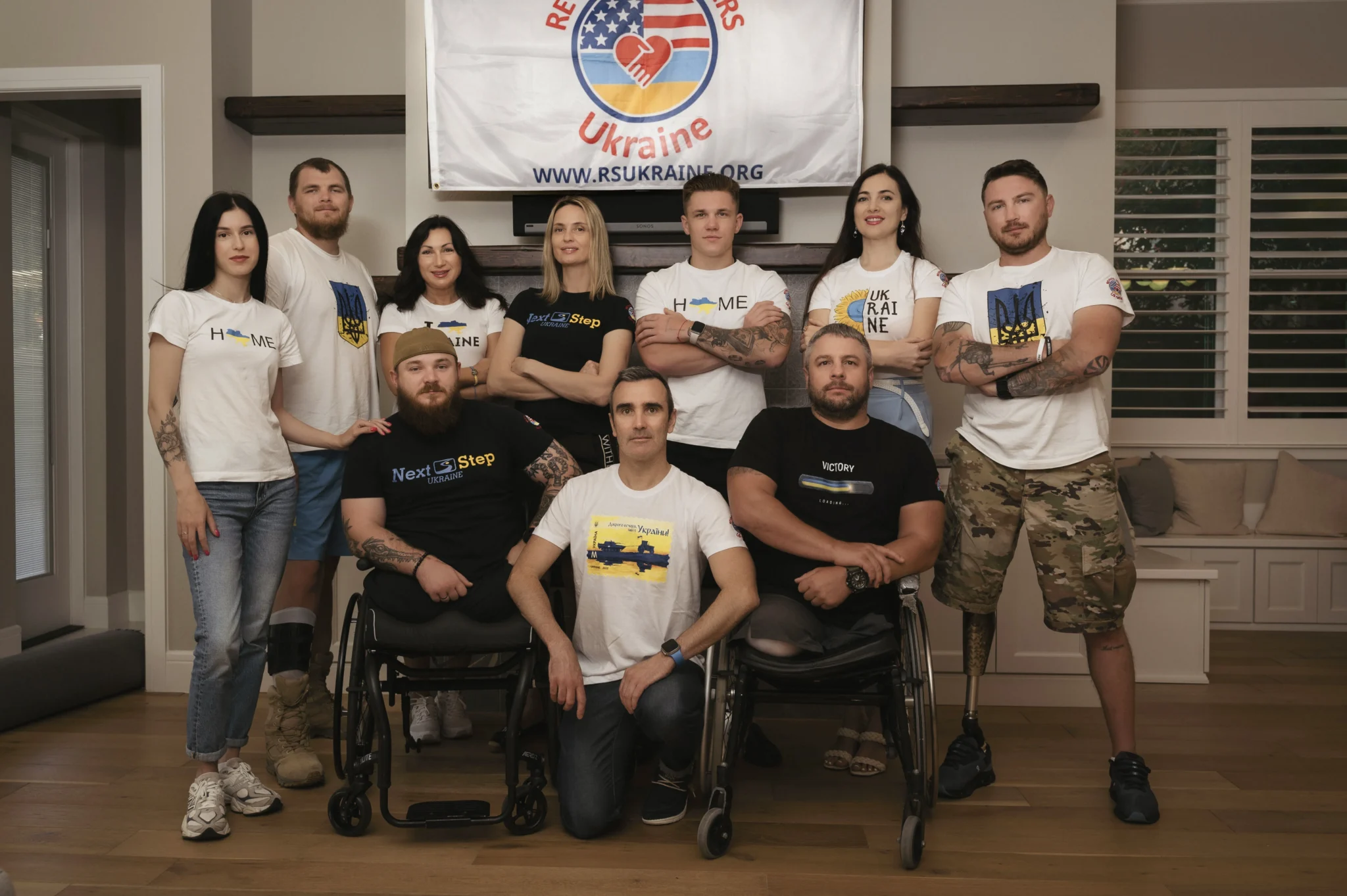
The charitable foundation Revived Soldiers Ukraine was created in 2015; later the NextStep Ukraine rehabilitation centres were opened, first in Irpin and then in Lviv, in close cooperation with American hospitals, and complex reconstructive operations and prosthetic fitting were carried out. Today, besides its core tasks, the team is introducing robotic surgery in military hospitals in Ukraine.
This year the foundation signed a memorandum of cooperation with the Medical Forces Command of the Armed Forces of Ukraine, which created a legal basis for further cooperation in several key areas.
It covers the treatment, rehabilitation and prosthetic fitting of wounded Ukrainian defenders in medical institutions in the United States, internships for Ukrainian military doctors in the US, and the supply of a Da Vinci Xi robotic surgical system for the hospital level of the Armed Forces.
At the same time, the foundation has for many years worked effectively with the Medical Forces Command and the hospitals of the Armed Forces of Ukraine, so signing the memorandum became an important step in developing this cooperation further.
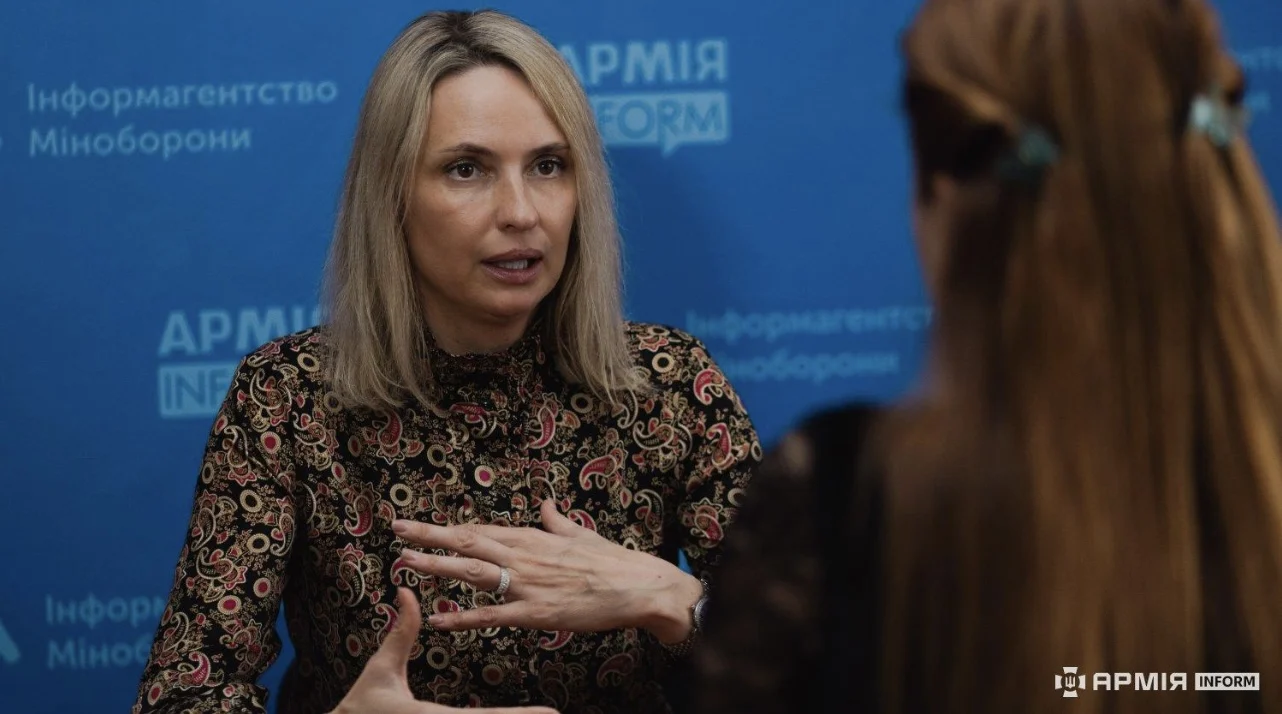
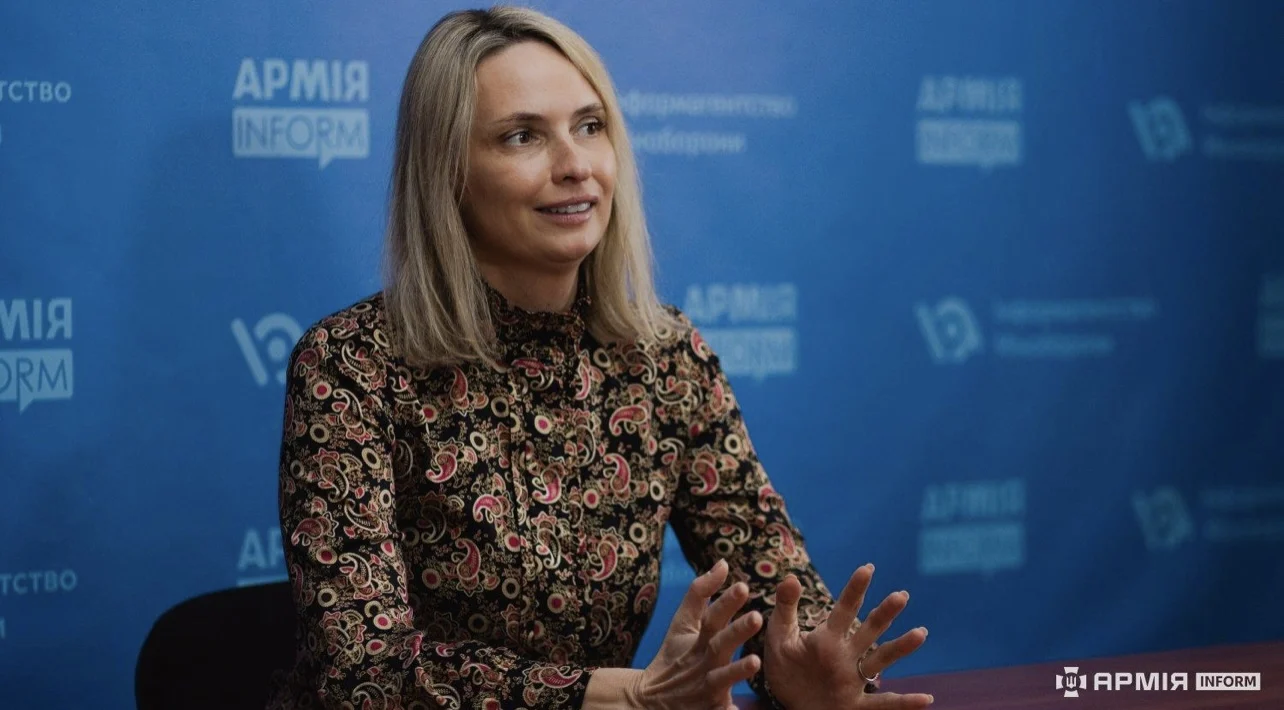
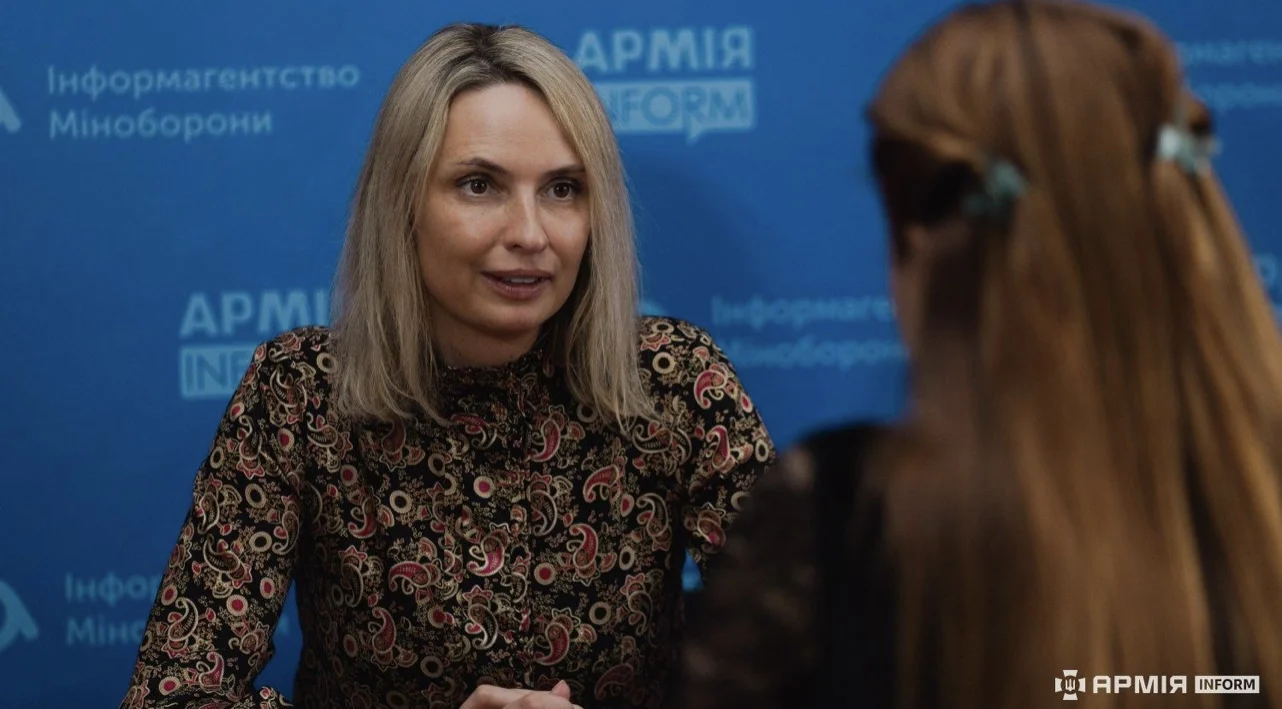
In an interview with ArmyInform, Iryna Vashchuk-Disipio, founder of the charitable foundation Revived Soldiers Ukraine and the NextStep Ukraine medical rehabilitation centres, spoke about how she built a rehabilitation system essentially from scratch, why some Ukrainian service members travel to the US for a chance to save a limb, what Ukrainian veterans lack after treatment, and why support cannot end together with the rehabilitation course.
“They told me: don’t even start. In Ukraine they won’t let you do anything”
— At what point did you realise that simply helping the wounded was not enough and you needed to create your own rehabilitation centres?
— We founded Revived Soldiers Ukraine in 2015 in response to the war in eastern Ukraine. Before that we were all volunteers.
We began bringing severely wounded service members to the US, where we worked with the NextStep rehabilitation centre in California. The first were two guys who had lost the ability to walk because of spinal cord injuries.
One of them is Serhiy Tytarenko, a captain and helicopter pilot. He was shot down near Sloviansk, the helicopter crashed, and the commander pulled Serhiy out of the aircraft. By then he could no longer feel his legs.
The other is border guard Rustam Orosov. During shelling near Volnovakha, a bullet damaged his spine.
It was the stories of these guys that allowed me to understand people with complex spinal cord injuries who remained paralysed. I am a Master of Sport of Ukraine, and I had never before come so close to people who cannot stand on their own feet and do not feel their bodies. I had to learn all of this.
We sent the first severely wounded man to the US back in August 2014. And in November 2015 the charitable foundation Revived Soldiers Ukraine officially began operating.
At first we could help only two people at a time. So we organised the process like this: two service members complete a certain stage of rehabilitation, and another two arrive to take their place. But we understood that people with such injuries need rehabilitation throughout their lives. It is necessary to prevent secondary complications, infections and other health problems.
I looked at how the American centre worked and thought: why not create something similar in Ukraine?
But it took me three years to dare to start. People told me: “Ira, don’t even start, you won’t manage anyway. In Ukraine nobody will let you do anything.”
We did not listen.
At the end of 2018 we invited experienced rehabilitation specialists from the Modrychi centre to work in Irpin. We rented a small space and began buying equipment, in particular electrostimulators. We strategically located ourselves opposite the Irpin military hospital so that the wounded could come to us straight from the hospital.
Later I decided that we needed our own premises. I found donors who agreed to fund its purchase. By 2021 we were already working in our own centre of about 220 square metres.
This was a matter of principle for us: we were investing in our own space, which could grow along with our needs.
“I thought nothing was left of our centre. But we survived”
— The full-scale invasion put everything you had built at risk. Was it frightening to start again?
— In February 2022 we evacuated the wounded service members to western Ukraine. Some of the rehabilitation specialists left as well. Our foundation’s car remained on the bridge in Irpin. When I watched footage from the city, I saw how many fragments had hit it.
That car became a symbol of our rehabilitation centre for me. I truly thought we had lost it.
The previous premises where we had worked earlier burned down completely. I was convinced that nothing was left of our centre either. But in June 2022 we returned to Irpin.
I had no fear that we would not be able to recover.
I travelled to events in the US and met with donors. They asked: “And how is your rehabilitation centre?”
I answered: “There is no NextStep any more.”
People reacted: “Oh no!” — because many of them had helped us raise funds for equipment. But in time new American donors appeared and began supporting the foundation with substantial contributions.
We did not just resume work in Irpin; we expanded. In 2023 we opened a second rehabilitation centre, in Lviv. This time we built it the way we thought it should be, not the way circumstances allowed.
We invested about two million dollars in the Lviv centre — in the premises, the equipment and launching the work. We also work closely with Brooks Rehabilitation Hospital in Jacksonville, Florida, which specialises in neurotrauma.
Our specialists train with their American colleagues and then share what they learn with the rest of the team. It matters to us not just to buy the best equipment but to learn to use it as effectively as possible.
We work on an outpatient basis; we do not yet have inpatient beds, so we arrange separate accommodation for service members who come for rehabilitation.
Right now we see about 45 service members a day in our two centres.
For me this is a very significant contribution to the recovery of our defenders.
“Our task is to give a person back the ability to feel their own body”
— What injuries do your centres deal with? What is hardest in restoring service members?
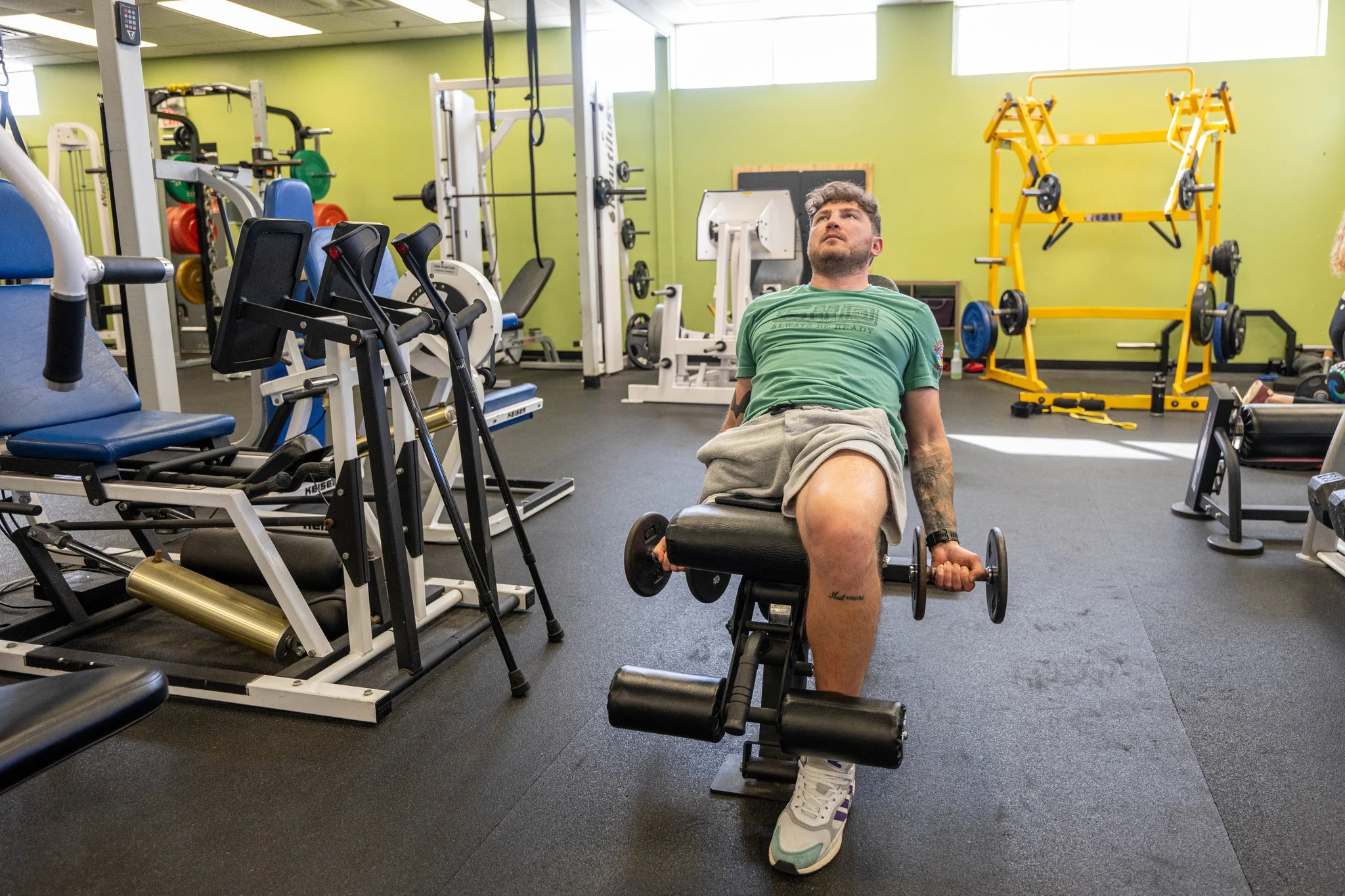
— Our main focus is neurotrauma. These are head wounds, damage to the nervous system, injuries after which a person may lose sensation or the ability to move their limbs. Service members come to us with bullet and shrapnel wounds, including brain injuries, as well as after strokes.
In my view, some of the most difficult cases are when a person stops feeling half of their body.
Our task is to help them regain lost functions as far as possible, or to adapt to the new condition and learn to live on.
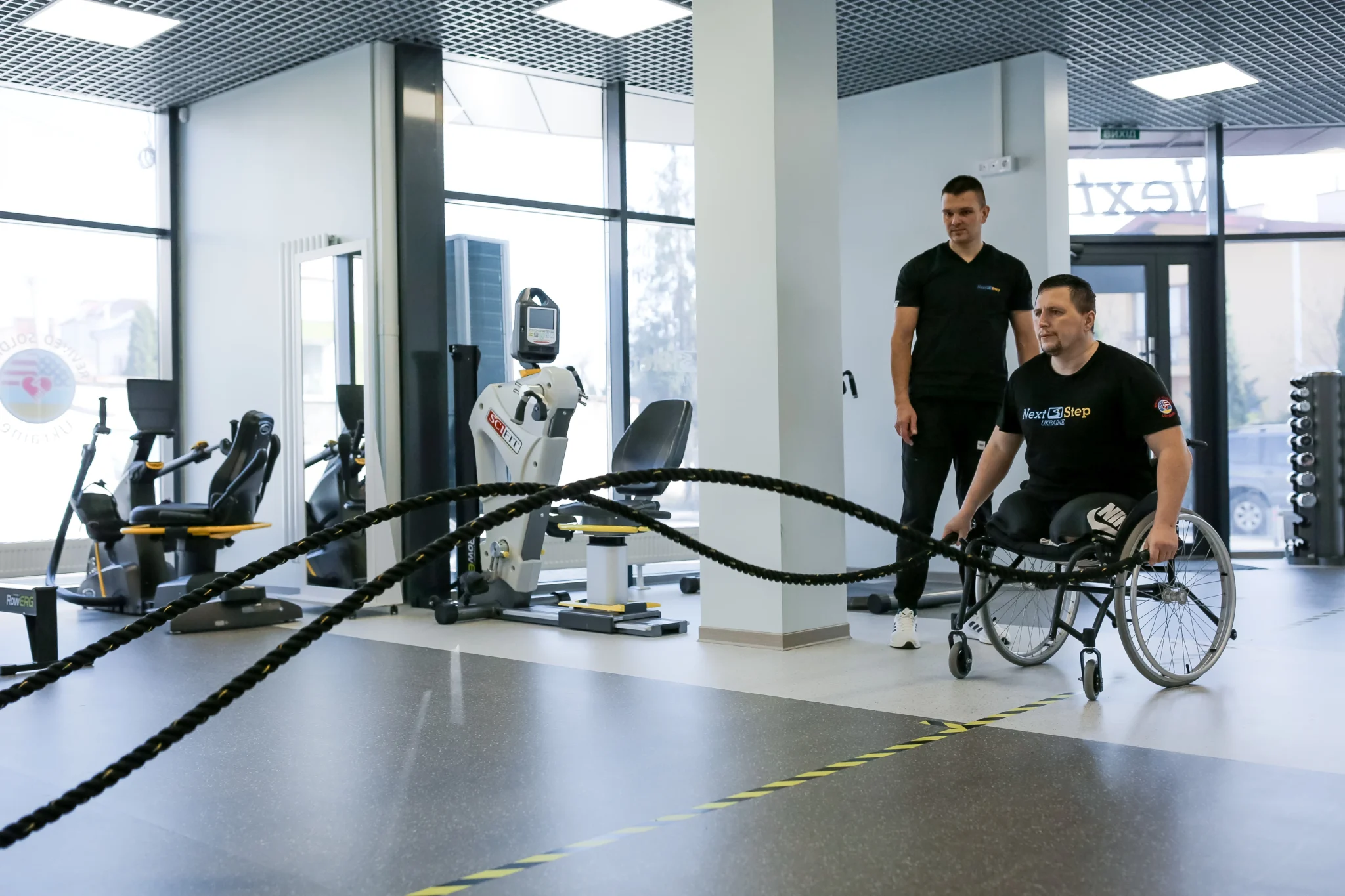
Rehabilitation is not only exercises with a specialist. It is also the ability to get out of bed on your own, get dressed, transfer into a wheelchair, and later return to as full a life as possible.
We also work with orthopaedic injuries. This is a separate area that allows us to restore service members faster and, if their health allows, return them to service. In addition, we provide pre-prosthetic and post-prosthetic rehabilitation.
A person has to be physically prepared for prosthetics. If a service member has lost both legs, it is not enough simply to fit prostheses — you have to teach him to walk.
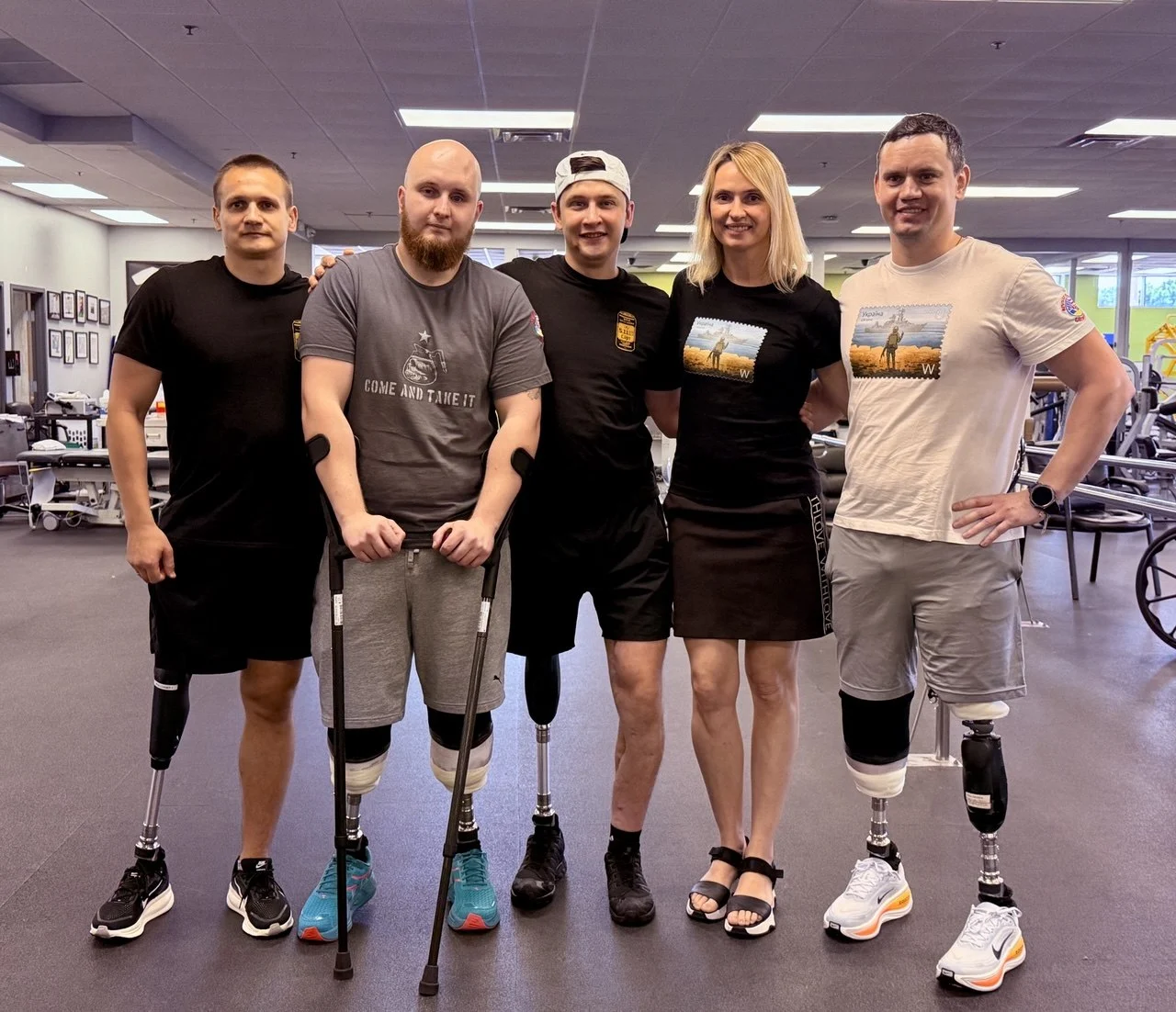
In the US we cooperate with specialists who deal with complex prosthetics. Training can take from six to ten months, and sometimes longer.
Our centres in Ukraine prepare service members for this process: they help restore strength, coordination and balance. Then prosthetic fitting begins in the US, after which walking training continues.
For our patients at the prosthetics centre there is even a special benchmark: to walk three kilometres to their place of residence on a prosthesis. For a person who recently lost limbs, this is an enormous challenge.
From the outside it may seem that it is enough to put on a prosthesis and you can walk. But that is not at all so. It takes time, training, patience and constant support.
“They arrive with sad eyes. And then they understand that life goes on”
— What is harder for the severely wounded: to relearn everything physically or to believe psychologically that life after injury has not ended?
— I cannot even imagine what I would feel if I lost an arm or a leg or ended up in a wheelchair. It is a completely different way of life. Ordinary things now take far more time and effort.
A person adapts to their injury, but their rhythm of life changes. What used to happen automatically now requires planning, physical strength and help.
When service members arrive in the US, they are often very disappointed. They have sad eyes. It seems as if their life has stopped for a while.
But gradually they begin to see another side of life. They understand that they can adapt to new circumstances and that there is a future ahead.
Sometimes I even forget that one of our guys has prostheses. They walk, talk, joke, make plans. And you see that the person is living again.
They can marry, start families, raise children, travel, do the things they love. Life does not necessarily become what it was before the injury, but it can be full and happy.
We take the guys to the ocean, organise trips, give them a chance to change their surroundings. In the US they can not only undergo treatment but also see that the world is much bigger than a hospital ward.
And I see how they change. They go home as different people. For us this is a small victory.
When rehabilitation becomes a life-saver
— Have there been cases when in Ukraine a service member had almost nothing left to be offered, and treatment abroad gave him a chance?
— Yes. We work not only with neurotrauma and orthopaedic injuries but also with complex abdominal trauma — wounds to the organs of the abdominal cavity.
Sometimes we receive service members for whom specialised treatment is critical. In particular, parenteral nutrition — when the necessary nutrients are delivered intravenously because a person cannot take them in sufficient quantity through an injured digestive system.
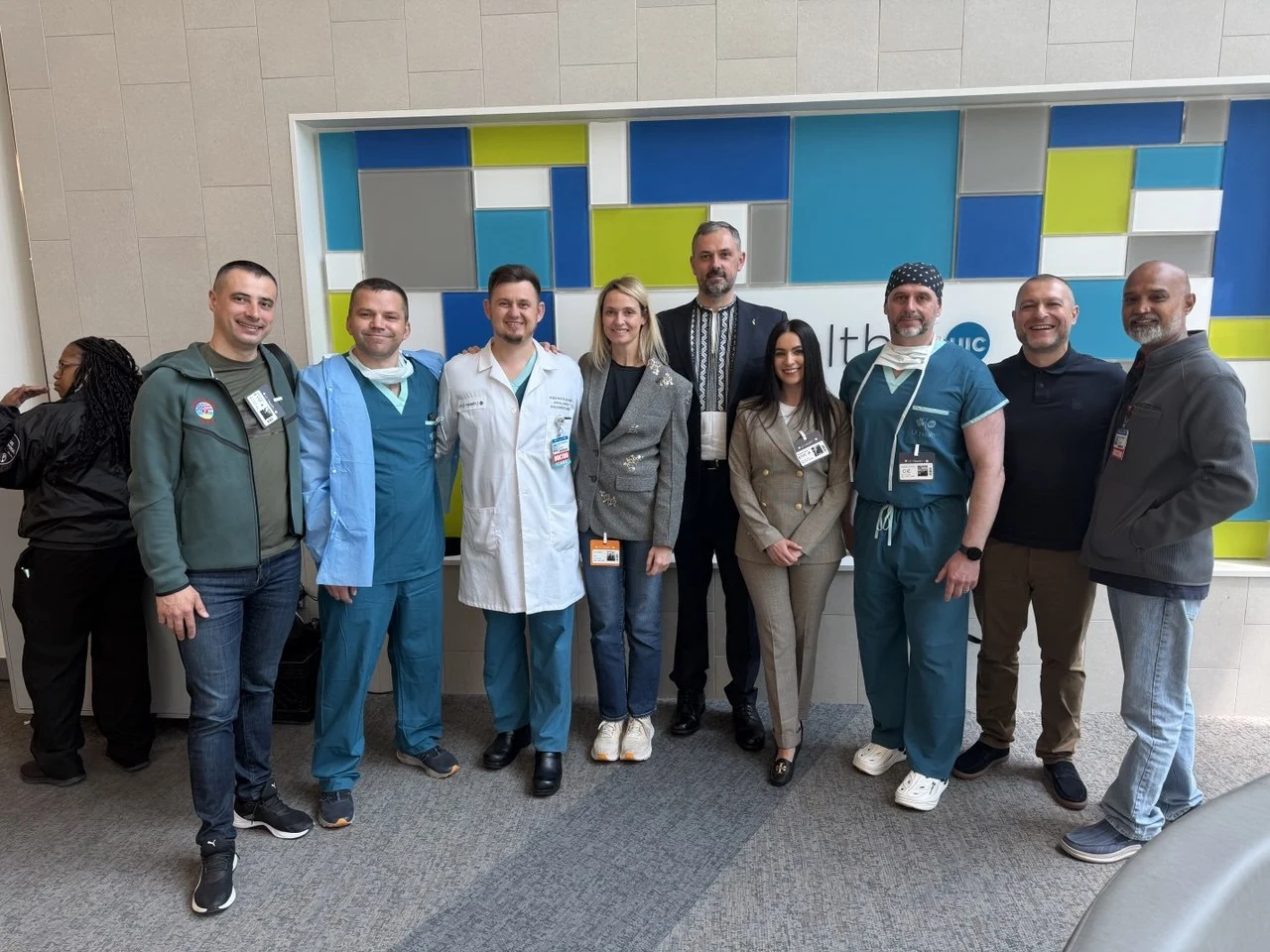
Such patients need complex treatment, special medications and long recovery. We work with American hospitals and surgeons who take on these cases, in particular UIC Hospital in Chicago.
Sometimes these are service members who have only a small part of the intestine left after being wounded. They can be critically emaciated, weighing 45–50 kilograms. Their recovery takes months, sometimes a year or a year and a half.
But they go home alive. They return to their families.
We lost two service members whom we did not manage to evacuate. In one case the documents were already ready, but we could not arrange a plane in time. The other patient died in intensive care literally two days after we tried to organise help.
These stories show how important it is that doctors tell us about complex cases as early as possible. Time is needed for documents, visas and organising a medical evacuation. When a critically wounded person is concerned, every day can matter.
We cannot know about all cases in Ukraine. We do not always see what happens to service members after discharge. So I want doctors and families to know: if a case is extremely complex, it is worth looking for options rather than giving up on them at once.
For us this is one of the main areas of work.
“We cannot simply agree to amputation if there is a chance to save the limb”
— Tell us about a service member whose story particularly affected you.
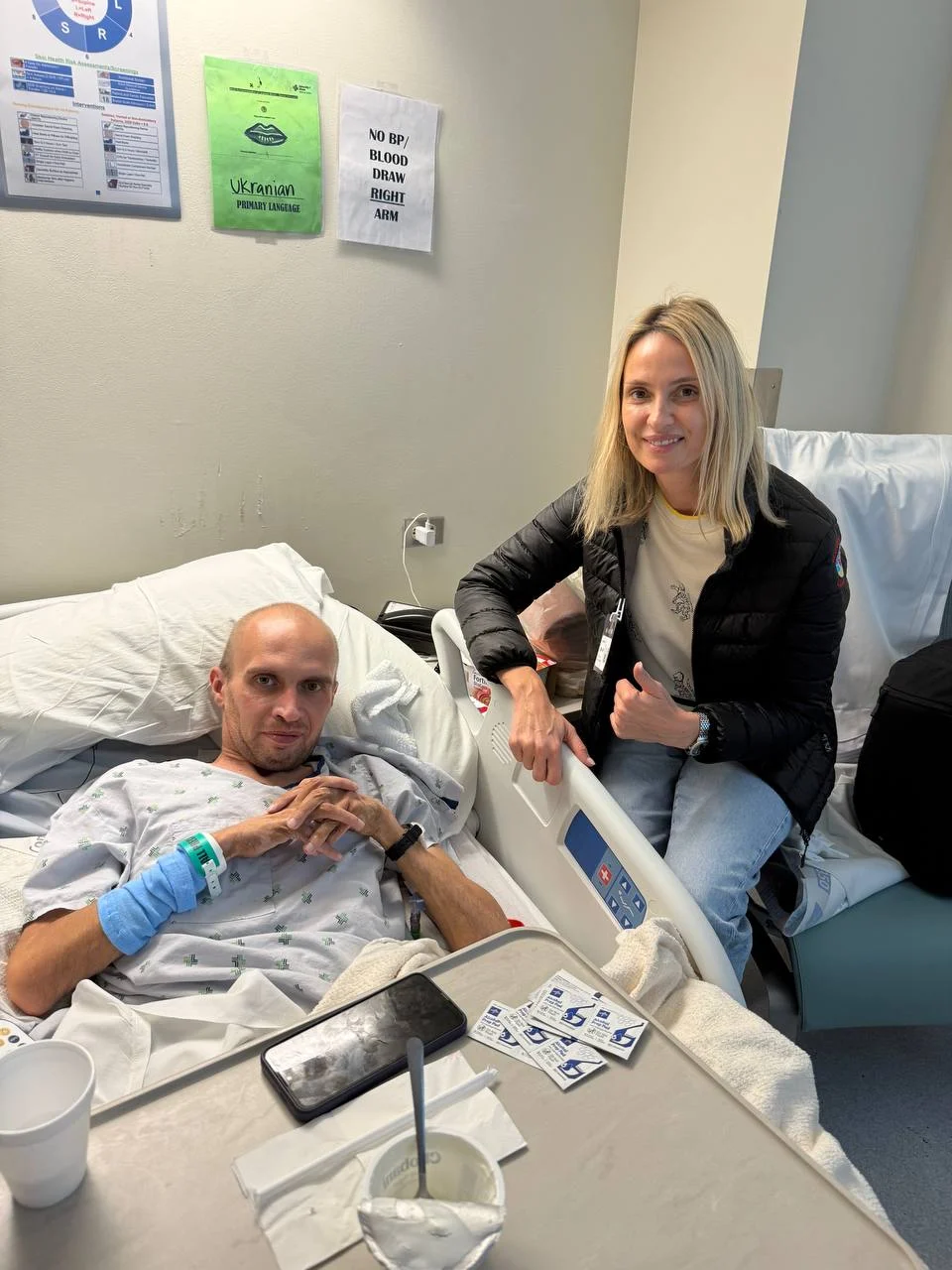
— We are now working to save the leg of Mykola Yukhymenko. He has served in the 79th Brigade since 2014, was one of the legendary defenders of Donetsk airport and received 13 serious wounds. In one combat episode he fell from the fifth floor and broke his spine.
In 2022 near Kharkiv, Mykola suffered a severe leg wound. The limb was practically torn off, but doctors managed to save it. However, they did not overcome the infection, and the problem stayed with him for years.
In May he flew to the US. We ran tests and examinations, consulted doctors and determined what would be the best decision: to amputate the leg and move on to prosthetics, or to fight to save the limb.
I asked myself: if we agree to amputation, then why did we bring him to the US at all? Such an operation could have been done in Ukraine. We are looking for options that are not available locally.
So we decided to fight for the leg.
Specialists at Penn Medicine, one of the leading medical centres in the US, with whom we cooperate, took on Mykola’s case. Surgeons with experience in complex reconstructions, infection treatment and the restoration of bones, muscles and nerves joined the work.
A difficult process lies ahead. We cannot guarantee the result in advance, but we are ready to do everything possible to save the limb.
There are other similar cases. One service member spent two years in inpatient treatment at the Kyiv military hospital. We took him to the US, carried out the necessary operations and overcame the infection. He went home.
It is precisely such complex cases that are our profile.
Sometimes people are left alone with their problems after discharge. Some live with an infection for years; some cannot get the reconstructive surgery they need. We do not have the resources to find everyone, but we are ready to consider requests if a person needs help that can be arranged through our partners in the US.
Sometimes the hardest part is not even the operation itself but finding the patient in time so that he has a chance at treatment.
“A person may be told they will never walk. But they cling even to five percent of a possibility”
— You do complex prosthetics, including in cases where in Ukraine they see no prospect of restoring walking. How realistic is it?
— There are very high amputations where fitting a prosthesis and teaching a person to walk is extremely difficult. In Ukraine there may not be enough experience with a specific case, and the service member is told he will not walk again.
We bring such people to the US, where specialists assess the possibilities for prosthetics.
Of course, this does not mean the person will be able to walk on prostheses every day and give up the wheelchair entirely. With a very high amputation, walking may be possible only in certain situations, require crutches and considerable physical effort.
But even such a possibility can mean a great deal to a person.
Prosthetic fitting alone costs 55–60 thousand dollars in some complex cases. And if you add long rehabilitation, treatment and other expenses, the total can be even higher.
Right now we are preparing one service member with many years of service for prosthetics. I explain to him that he may be able to walk only occasionally, and that the whole process will take almost a year and cost about 100 thousand dollars.
He answers: “We will walk.”
And I cannot tell him “no” without trying to find a way.
For someone those five percent are a trifle. For a person who has been told he will never walk again, it is a chance he is ready to fight for.
Robotic surgery: the next step for Ukraine’s military medicine
— You not only save limbs and help service members recover, but also work on developing surgery in Ukraine. Tell us about this area.
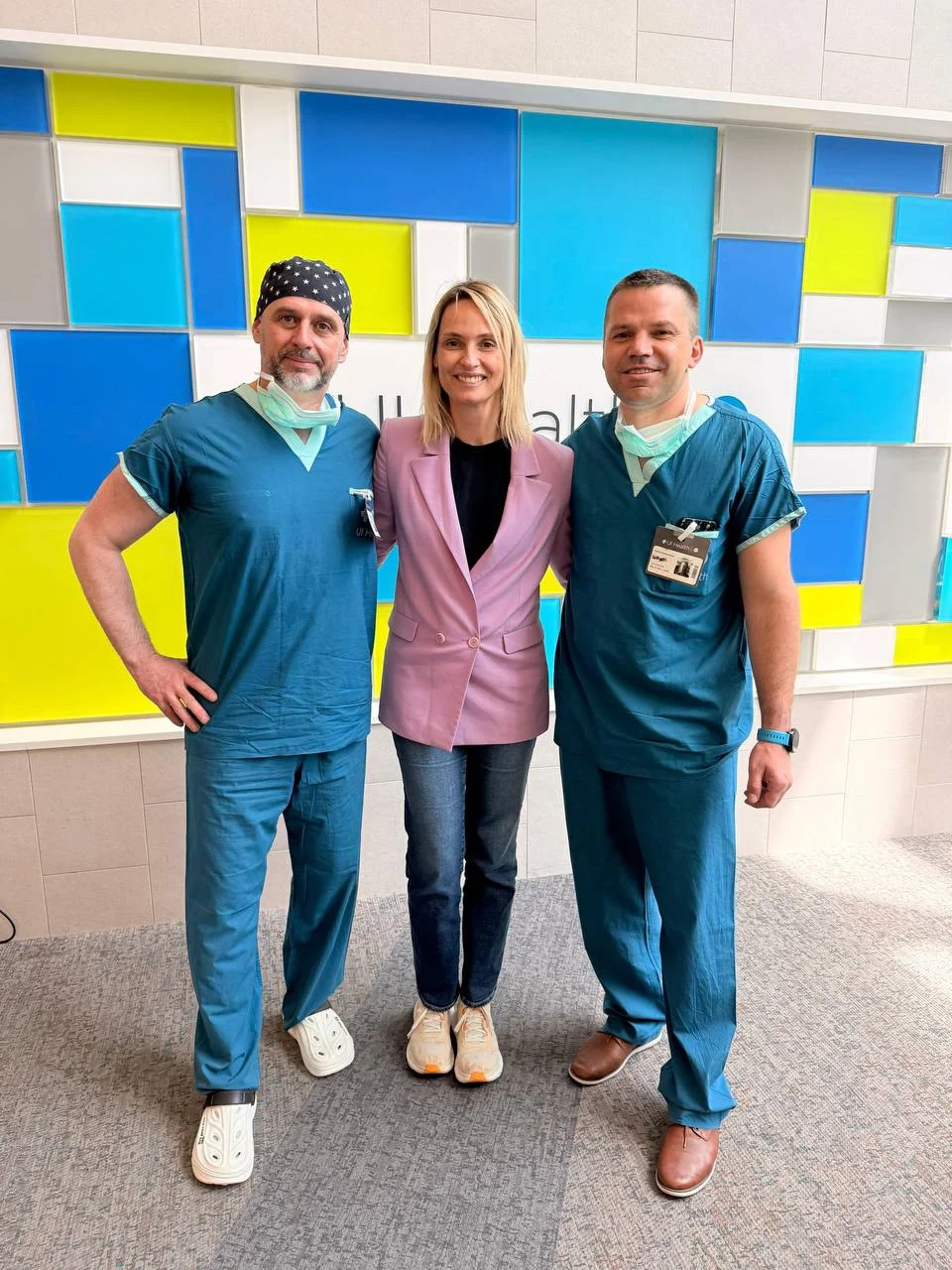
— Robotic surgery is our next big challenge. We began working on this project together with UIC Hospital Chicago.
By the end of 2026 we plan to hand over a Da Vinci Xi robotic surgical system to the Kyiv Military Hospital. It costs about two million dollars.
For this we had to persuade Intuitive Surgical, the company that makes such systems, to enter the Ukrainian market. At first the company did not want to come to Ukraine: there is war here, there are risks, while the US and Europe already offer a large market.
But we managed to reach an agreement. We also organised training for Ukrainian surgeons in the US and Poland.
To give a sense of scale: about a hundred such robotic systems already operate in Poland, whereas in Ukraine, to my knowledge, there are not yet any certified da Vinci systems.
We want Ukrainian military hospitals to gain access to technologies that will widen the possibilities of surgical treatment. It is not only about one robot for Kyiv. We are already talking about introducing robotic surgery further in other military hospitals, in particular in Lviv and Odesa.
This project is also linked to the modernisation of operating rooms. Two operating rooms at the Kyiv Military Hospital were damaged, and we undertook to help with the repair work. In particular, we plan to install a special ventilation system that will meet the requirements for an operating environment and help reduce the risk of infections.
This is large-scale work. We are bringing in partners, charitable foundations in the US, the Ukrainian diaspora and people we have worked with for many years.
Sometimes I am surprised myself that we dared to do this. But it was the same with the first rehabilitation centre in Ukraine: at first it seemed impossible, and then we simply started doing it.
There is no point in going back now. We have set the process in motion and want to bring it to a result.
For us robotic surgery is the next step in developing military medicine.
“After the full-scale invasion the Americans said: your veterans are our veterans too”
— You have worked with the US for many years. Has the attitude of Americans towards Ukrainian service members changed since the start of the full-scale invasion?
— Very much.
Before 2022 I tried to involve Americans in supporting our service members, but mostly we worked with the Ukrainian diaspora.
These are people whose families survived repression, were forced to leave Ukraine, whose parents or relatives went through Siberia. Part of this diaspora was already born in the US, some speak Ukrainian poorly, but people preserve their identity, open churches and cultural centres and support Ukraine.
They were the first to believe in our work. They were the first donors who helped fund the treatment and rehabilitation of severely wounded service members.
After the start of the full-scale invasion, Americans saw how Ukrainians fight for their home, language, culture and freedom. They saw our resistance.
Earlier I often heard: “We have our own veterans who need help.”
After the full-scale invasion the attitude changed. Our veterans became theirs as well.
Now about half of our donors are Americans, and the other half are members of the Ukrainian diaspora and people who supported us earlier.
We mostly operate thanks to individual donations. This is not a story about a big grant mechanism that funds all the activity. These are people who learn about our foundation, see our work and decide to help.
Americans support service members not only with money. When our guys go through prosthetic fitting, train to walk and take part in events, people come up to them, hug them and thank them for their service.
Police officers driving past may honk at them as a sign of support.
This matters to our service members. They feel that their struggle is seen and valued.
We are not the biggest or best-known charitable foundation. We have a small team focused on practical work: treatment, operations, rehabilitation and prosthetics.
But I see how many people are ready to join in once they understand what exactly needs to be done.
“Every wounded veteran is the responsibility of every Ukrainian”
— You talk a lot about physical recovery, but psychological support is no less important. What, in your view, do our veterans lack most?
— Support. Sometimes even the simplest kind — human support.
We take part in events in the US to which our service members are invited. People applaud, thank them for their service and express respect. But the guys themselves often say that they lack support in everyday life.
It is extremely important for a person to have a family, loved ones, people for whose sake they want to recover. Service members who have children and wives are often highly motivated to return to ordinary life.
We have Vitaliy Ivashchenko from the Third Special Operations Forces Regiment. He lost both legs. Last year, because of a severe infection, he was put into an induced coma. Doctors managed to overcome the infection, but such complications can return, so he needs constant medical supervision.
Vitaliy badly wanted to take his son to school.
Last year he dreamed of walking him to first grade, but he was in a coma. This year he wanted to take him to second grade — on prostheses.
We brought him to the US for prosthetic fitting, but it turned out that the infection had returned and the wound remained open. First he had to be treated and operated on again, and only then return to the question of prosthetics.
Once again he could not fulfil his dream on time.
I motivated him: “Vitalik, you will still take your son to third grade. I guarantee you will make it.”
His wife and son support him. And I see how important that is.
But there are service members who come home and do not have such support. A person may feel unneeded, may not see their place in society. This is a very dangerous state that cannot be ignored.
In the US our guys sometimes thank people not so much for financial help as for the fact that people come up to them, hug them, talk to them, and take an interest in their lives.
Of course, everyone has their own limits. One service member, for example, joked: “Ira, I’m only doing this for you,” when he had to hug people. But on the whole, human attention matters enormously.
We also try not to lose contact with our patients after rehabilitation ends. We have communication groups, we invite veterans to events and organise joint activities.
We take part in marathons and help service members get involved in sport, in particular in programmes such as the Invictus Games.
One of our patients, Dmytro, has a severe shrapnel head wound. He has been working with us since 2018. He lives in Bila Tserkva but sometimes comes to the centre simply to have coffee, chat and be with the team.
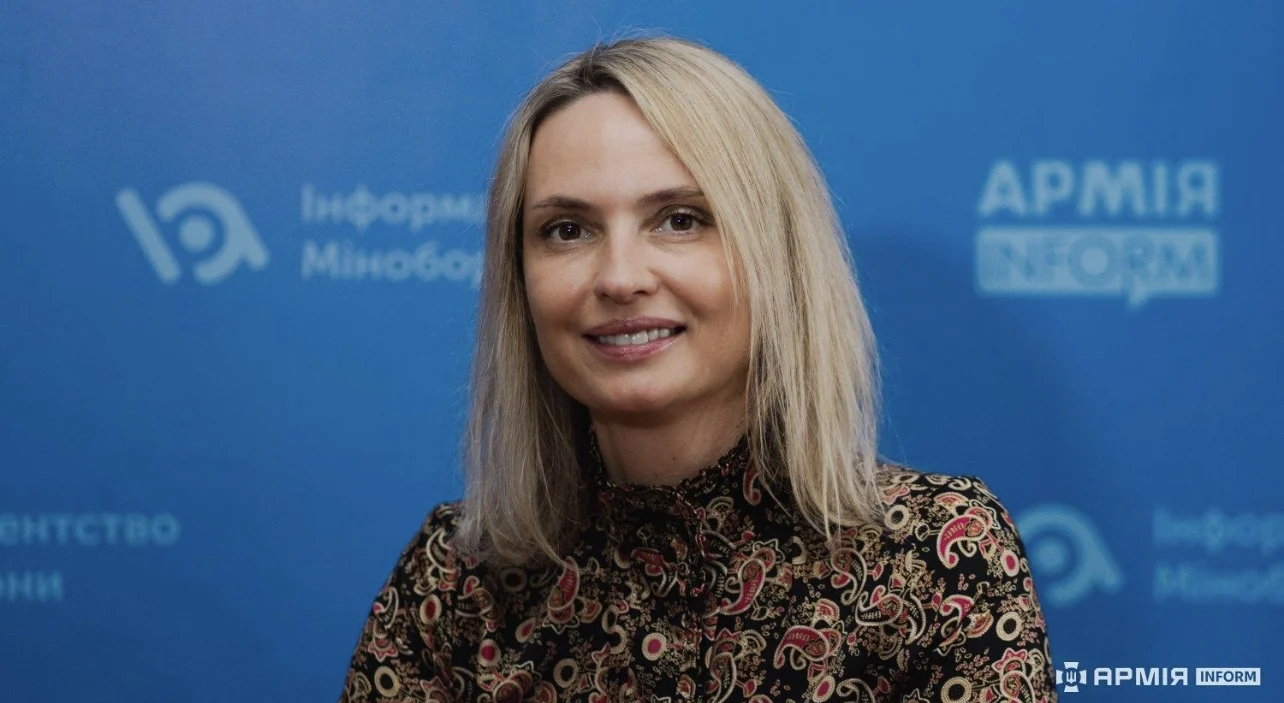
We have become a second family to him.
Such relationships do not end after the last session with a rehabilitation specialist. A person knows that they are remembered, that they can come back, that they are awaited here.
I very much want Ukraine to have more such organisations.
And the most important thing I want to convey: this is not only the responsibility of my foundation or our team.
Every wounded veteran is the responsibility of every Ukrainian.
These are our guys and girls. Not mine, not anyone’s in particular — ours.
“Charitable foundations should not try to replace the state, but should help where it is needed”
— What does Ukraine’s system of medical and rehabilitation care lack most?
— It is important to understand that charitable foundations should ideally complement the system of care rather than try to replace the state.
In the US charity is supported to a large extent by social and economic mechanisms. There are many foundations working in different areas, and people and companies have incentives to join charitable projects.
In Ukraine the system of charity is developing under different conditions. We constantly have to look for funds, attract donors and explain why a particular service member needs expensive treatment.
But regardless of who pays for the help, you need to think about the person not only during treatment.
We try to create a family atmosphere for our patients. We help them stay in a social environment, meet other people and take part in sports and community events.
Because rehabilitation is not only physical recovery. It is a person’s return to life in society.
A veteran needs to be able to find a job, develop his own business, do sport, start a family and make plans.
Today Ukraine has veteran hubs, psychological centres and grant programmes for starting a business. The Ministry of Veterans Affairs supports various initiatives. We cooperate with a psychological hub in Lviv that helps service members undergoing rehabilitation with us.
Such opportunities already exist, but they need to be talked about more so that people know where to turn.
We refer our patients to available programmes, support their sports initiatives and help them find opportunities for further development.
At the same time, the scale of need is enormous. Our centres work with about 45 service members a day, but there are hundreds of thousands of wounded in Ukraine.
We cannot help everyone on our own. That is why a system is needed in which state institutions, medical facilities, charitable foundations, communities and employers work together.
Recovery for years: what will happen to veterans after the war ends?
— Should we already be preparing for the fact that veterans’ rehabilitation will last for decades and the psychological consequences of the war will stay with people for life?
— Absolutely. Rehabilitation does not end when a person is discharged from hospital or completes a particular course of sessions.
My own brother also fought. He was at war in 2015–2017 and was wounded. I saw what he went through after he came back.
When a person has lived through war, their nervous system, psychological state and perception of the world can change. Sometimes it takes a long time to learn to live at an ordinary rhythm again.
I also brought my brother to the US, tried to show him another world and help him recover psychologically.
This is very important. It is not only service members who need psychological help but also medics who work with the wounded every day and bear an enormous load.
Our doctors work in extremely difficult conditions. Every day so many wounded arrive that it is hard for Ukrainian military medicine to cope with all the needs. That is why some patients are treated abroad — this also helps relieve Ukrainian medical institutions.
Revived Soldiers Ukraine helps dozens of service members in the US every year. These are mostly very complex cases that require specialised treatment.
But the country as a whole needs a much broader system that will keep working after the hostilities end.
Veterans should not feel that they have been forgotten after the war. We need to develop rehabilitation centres, psychological help, employment programmes, veteran spaces and opportunities for social adaptation in advance.
A person must know that help will not disappear once they stop being a patient of a particular hospital or a participant in a particular programme.
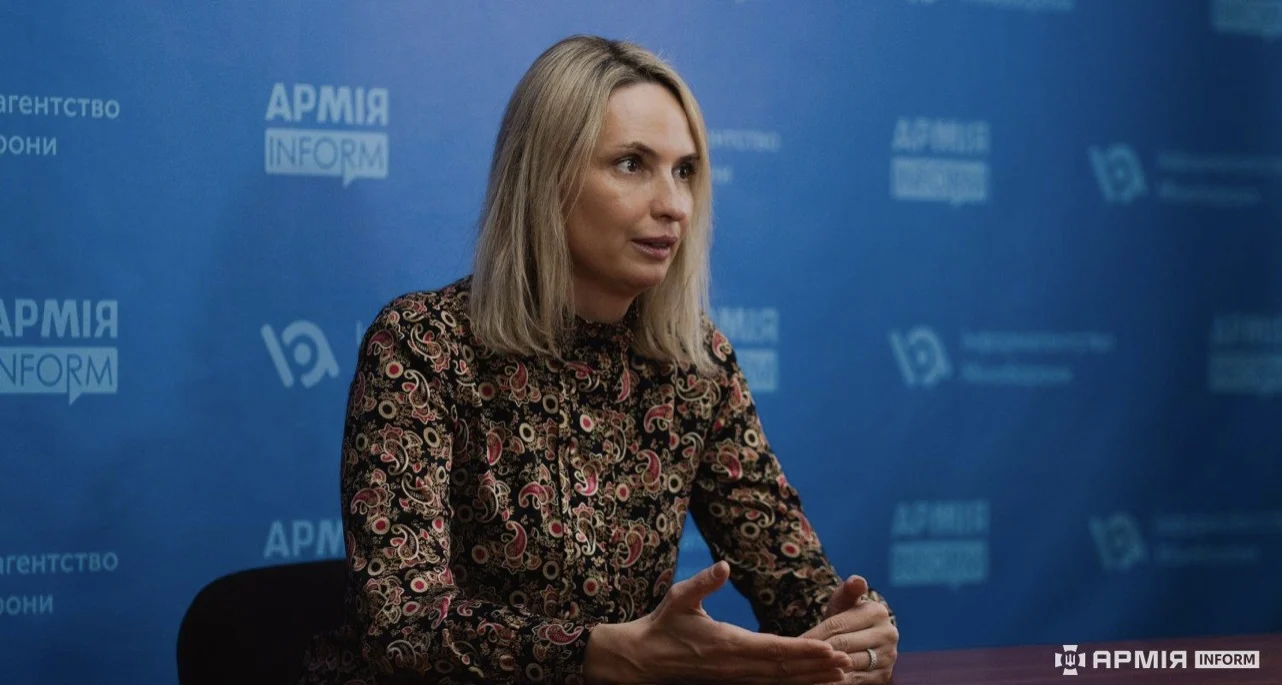
“Sometimes I cry when I listen to their stories. But my job is to help them move on”
— Every day you deal with severe wounds, human pain and the fight for life. What is hardest for you personally?
— When I prepare a service member for a trip to the US, I study his story. If a person is coming to us, it is usually a very complex case.
I try to talk with them, find an approach, earn their trust. And the service members open up and tell me what happened and what they went through.
These are very frightening stories. Sometimes it is about the line between life and death, about uncertainty, when a person does not know whether he will live tomorrow, what will happen to his body, whether he will be able to return to his family.
I listen to them and think: I am fine, I have something to compare with. But every day I work with people who have lived through tragedy.
Of course, to some extent we adapt to difficult cases. For a person who encounters such stories for the first time, it can be unbearable. But I understand that my role is not just to sympathise.
My task is to motivate these people, help them find opportunities, show that even after very severe wounds life can go on.
It is not always possible to restore lost functions. It is not always possible to guarantee recovery. But we must look for what is still possible.
If a person is told they will never walk, and we see even a small possibility, then we have to fight for it.
Perhaps a service member will not walk on prostheses all the time. Perhaps he will be more comfortable moving in a wheelchair. But if he can sometimes stand up and take a few steps, that alone can change his sense of his own capabilities.
I cannot look at a person and immediately say that nothing will work. We have to try.
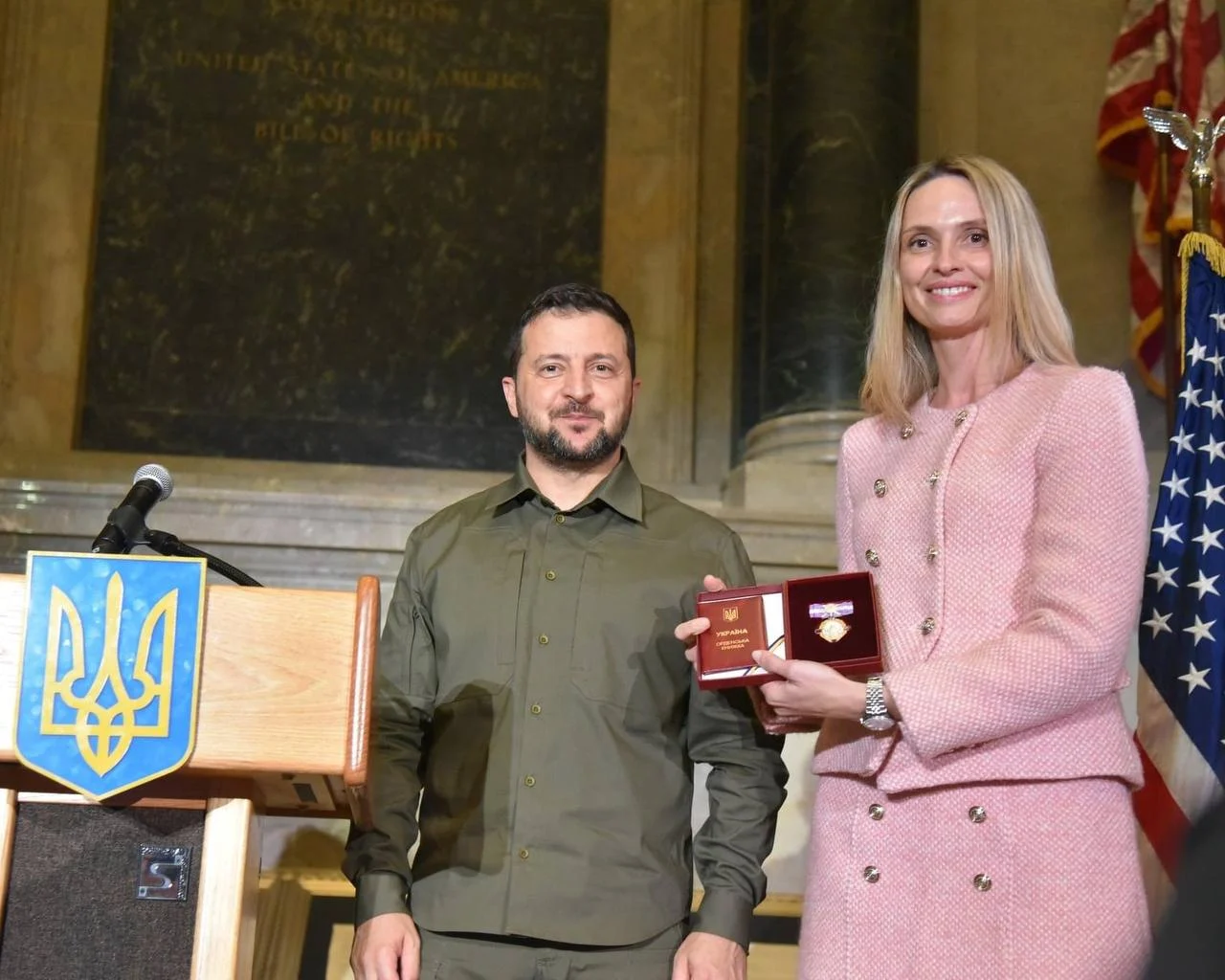
“My hour a day is yoga. Otherwise I simply would not manage to recover”
— You help others recover. What helps you recover?
— Yoga. Every day. Today I also went to yoga.
When the full-scale invasion began, we had no time at all to think about ourselves. There was so much work, so many questions, so many decisions to make. We had to look for funds, organise treatment, help people.
I lived constantly with the thought: if we do not do something, someone may not live until tomorrow.
So I decided to set aside one hour a day for myself. Yoga helps me stop, think, return to my own body and feel that I am also a person who needs recovery.
I have two children: Khrysta is ten, Nikolas is fourteen. I try to combine trips to Ukraine with their schooling and life in the US.
I am not a perfect mother. I do not manage to take part in all school events, volunteer at school or control absolutely everything. I constantly feel that I am falling behind on many things.
But I spend time with my children, take them to charity events, and they get involved in the foundation’s work.
Khrysta makes bracelets, sells her own things and earns money. When we organised Dzidzio’s charity tour, I brought the children to the concert in Chicago. My daughter set up two little suitcases and started selling her crafts. Nikolas helped sell the foundation’s merchandise.
I even pay him 15 dollars an hour for his work. He saw that his sister can earn more by selling her own products, and now he is asking to partner with her.
He says: “Mum, can I also make something of my own instead of standing at the cash register?”
I like that they learn to work, to be responsible for their decisions, to understand the value of money and at the same time to help others.
They see what I do, they know our service members, they understand why we hold charity events.
For me this is also an important part of upbringing: to teach children not to remain indifferent to other people’s pain, but also to build their own lives independently.
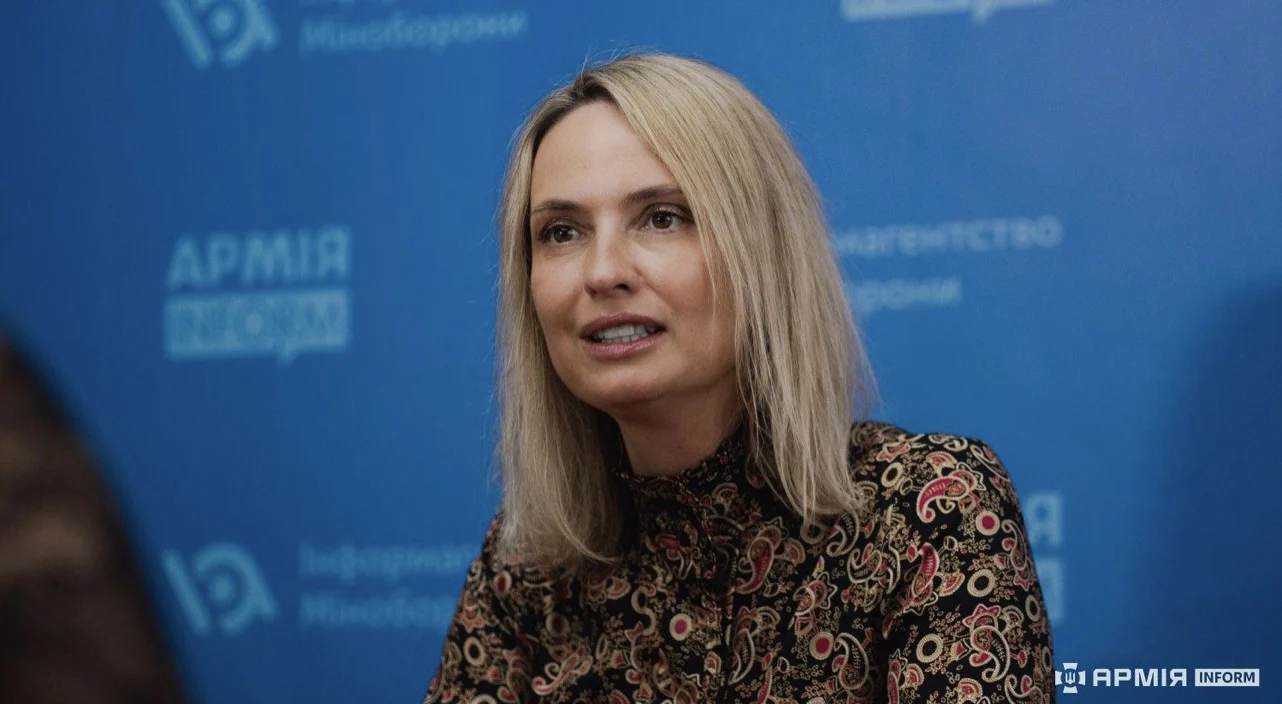
“We have already started. And now we must see it through”
— If you sum up your work, what is the main result of all these years for you?
— We save lives. We help preserve limbs, we give people back the ability to walk, we give a chance to those who in Ukraine could not be offered the treatment they needed.
And now we want to do even more for Ukrainian military medicine.
Robotic surgery is a big step. We managed to agree on something that used to seem unattainable. We have already begun the process, brought in partners, and are working on training specialists and on infrastructure.
I do not know whether I fully grasp the scale of what we are doing. But I know that we have already come a long way.
When we opened the first centre in Irpin, we were told that nothing would come of it. When we lost our premises because of the war, it might have seemed that we would have to start everything from zero. But we returned, resumed work and opened a centre in Lviv.
Now we are working on new projects.
And I want Ukrainian service members to have access to the best possible treatment, so that they can recover, return to their families and build their future.
We cannot change what has already happened to a person in war. But we can do everything possible to make their life after injury different — as far as medicine, technology and our joint work allow.
And of course I want us to have more opportunities to help. More partners, more specialists, more centres and more people who understand that supporting veterans is not a one-off action. It is a responsibility for years. And we must be ready to bear it.
Source: ArmyInform News Agency
Source: News Lviv Company (news.lviv-company.in.ua), https://news.lviv-company.in.ua/kozhen-poranenij-veteran-vidpovidalnist-kozhnogo-ukra%d1%97ncya-yak-revived-soldiers-ukraine-povertaye-vijskovix-do-zhittya.html